
Table of Contents
- Introduction
- Purpose of This Guide
- Who This Guide Is For
- Key Factors to Consider When Choosing a Commercial Espresso Machine
- Group Heads and Output Capacity
- Boiler Systems Explained
- Temperature Stability and PID Control
- Automation, Volumetrics, and Workflow
- Build Quality, Reliability, and Service Support
- Types of Commercial Espresso Machines
- Heat Exchanger (HX) Machines
- Dual-Boiler Machines
- Multi-Boiler and Gravimetric Systems
- Best Commercial Espresso Machines for New Cafés in 2026
- High-Volume & Professional Café Machines
- Mid-Range Commercial Machines
- Entry-Level Commercial Machines for Startups
- Detailed Machine Comparisons
- Performance and Consistency
- Ease of Use and Barista Training
- Energy Efficiency and Sustainability
- Space and Installation Requirements
- Installation and Infrastructure Requirements
- Electrical and Power Specifications
- Water Supply, Filtration, and Plumbing
- Space Planning and Ergonomics
- Maintenance, Servicing, and Long-Term Ownership
- Daily and Weekly Maintenance Tasks
- Preventive Servicing and Parts Availability
- Warranty and After-Sales Support
- Recommended Machine Selection by Café Type
- Small Cafés and Coffee Kiosks
- Medium-Volume Neighborhood Cafés
- High-Volume and Specialty Coffee Cafés
- Common Mistakes New Café Owners Should Avoid
- Underestimating Volume Needs
- Ignoring Water Quality
- Choosing Features Over Reliability
- Conclusion
- Final Buying Advice for 2026
- Preparing Your Café for Growth
Before listing machines, it’s essential to understand the technical factors that determine suitability for a café environment:
1) Group Heads
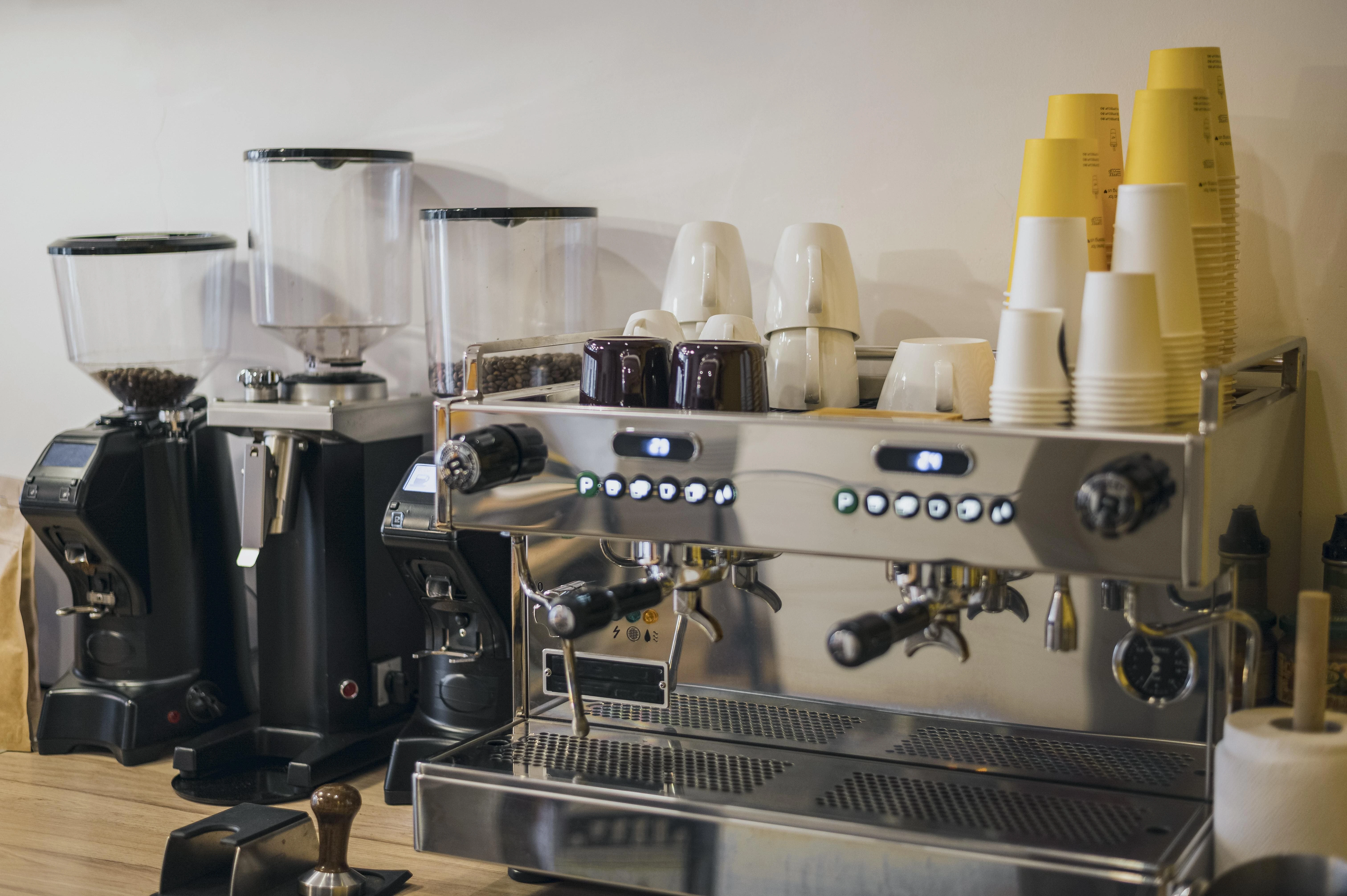
- A group head is where a barista pulls an espresso shot.
- More groups = higher simultaneous output (e.g., 2-group for medium traffic, 3-group for busier cafés).
2) Boiler Architecture
- Dual-Boiler: Separate boilers for brewing and steaming milk — optimal for cafés, consistent temperature and high throughput.
- Heat Exchanger (HX): One boiler with internal exchanger — can brew and steam simultaneously, slightly less precise than dual-boiler.
- Multi-Boiler: Each group and steam arm has dedicated boilers — best for high volume environments.
3) Temperature Control
- Machines with PID controllers (electronic temperature regulation) deliver stable shot quality and consistent steam performance — a must for commercial cafés.
4) Volumetrics and Automation
- Volumetric dosing (programmed shot volumes) increases consistency — helpful for busy cafés and novice baristas.
- Gravimetric systems (weight-based dosing) elevate precision further.
5) Build Quality & Support
- Stainless steel frame, industry-grade pumps, and widely available OEM service parts are critical for longevity and uptime.
Recommended Commercial Espresso Machines for New Cafés (2026)
Professional & High-Volume Options
La Marzocco Linea Classic S (EE & AV Versions)
- Suitable For: Most cafés starting with medium to high demand
- Key Tech: Dual-boiler, saturated group heads, excellent thermal stability; AV version adds automatic volumetric dosing.
- Why It Matters: Industry benchmark for consistency and durability under extended use.
Victoria Arduino Black Eagle Gravimetric
- Suitable For: Specialty & precision-focused cafés
- Key Tech: Multi-boiler architecture with gravimetric dosing for ground-to-cup accuracy.
- Why It Matters: Eliminates dose inconsistency, particularly valuable when training baristas or managing multiple shift changes.
Aurelia Wave Digit (3-Group)
- Suitable For: Larger cafés or multi-location businesses
- Key Tech: Digital controls, advanced T3 temperature regulation, larger boiler capacity.
- Why It Matters: Balanced between high performance and adaptability, with digital tools for workflow control.
Balanced Mid-Range Machines
Victoria Arduino Eagle One (2-Group)
- Suitable For: Cafés that balance volume with simplicity
- Key Tech: Efficient steam capacity and energy-saving components, with user-friendly interface.
- Why It Matters: Easier to train new baristas on while still delivering consistent espresso shots.
Synesso MVP Hydra (2-Group)
- Suitable For: Café environments prioritizing customization
- Key Tech: Hydraulic flow control and customizable panels for barista precision.
- Why It Matters: Strength in tactile control and performance tuning with reliability.
Entry-Level Commercial Machines (for New & Small Cafés)
Nuova Simonelli Appia Life (2-Group)
- Suitable For: Startups or cafés with moderate demand
- Key Tech: Simple design with effective PID temperature control and steady steam power.
- Why It Matters: Offers reliable consistency at a friendly entry-to-mid commercial price.
Sanremo Zoe Competition (2-Group)
- Suitable For: New cafés with limited budget but real commercial needs
- Key Tech: Auto-level boiler tech, PID control, user-friendly interface.
- Why It Matters: Single boiler tech tailored for simultaneous brewing + steam with temperature regulation.
Ascaso Baby T Plus (Compact 2-Group)
- Suitable For: Small spaces like kiosks or micro-cafés
- Key Tech: Thermoblock systems for independent espresso and steam performance.
- Why It Matters: Packs commercial features into a small footprint without major capability compromises.
Typical Performance & Installation Considerations
Plumbed-In Water Supply
- Always preferable for cafés — avoids frequent refills and ensures shot consistency. Most true commercial machines support direct water connections.
Power Requirements
- Commercial machines frequently require 220–240 V supply and dedicated circuits. Check local electrical infrastructure during installation planning.
Supporting Equipment
- Commercial grinder with stepless adjustment
- Water filtration and softening system (critical in hard-water regions)
- Barista tools: scales, tampers, knock box, etc.
Maintenance & Longevity
- Routine maintenance: backflush daily, descale periodically, and schedule annual service with OEM-certified technicians.
- Parts availability: Choose brands with strong local service networks to minimize downtime.
- Warranty considerations: Confirm covered components, especially boilers and pumps.
Final Recommendations (by Café Type)
| Café Type | Best Fit |
| New café, professional quality | La Marzocco Linea Classic S |
| Specialty & precision focus | Victoria Arduino Black Eagle Gravimetric |
| Balanced performance | Victoria Arduino Eagle One, Synesso MVP |
| Value-oriented commercial start | Nuova Simonelli Appia Life, Sanremo Zoe |
| Small footprint / space constraints | Ascaso Baby T Plus |