
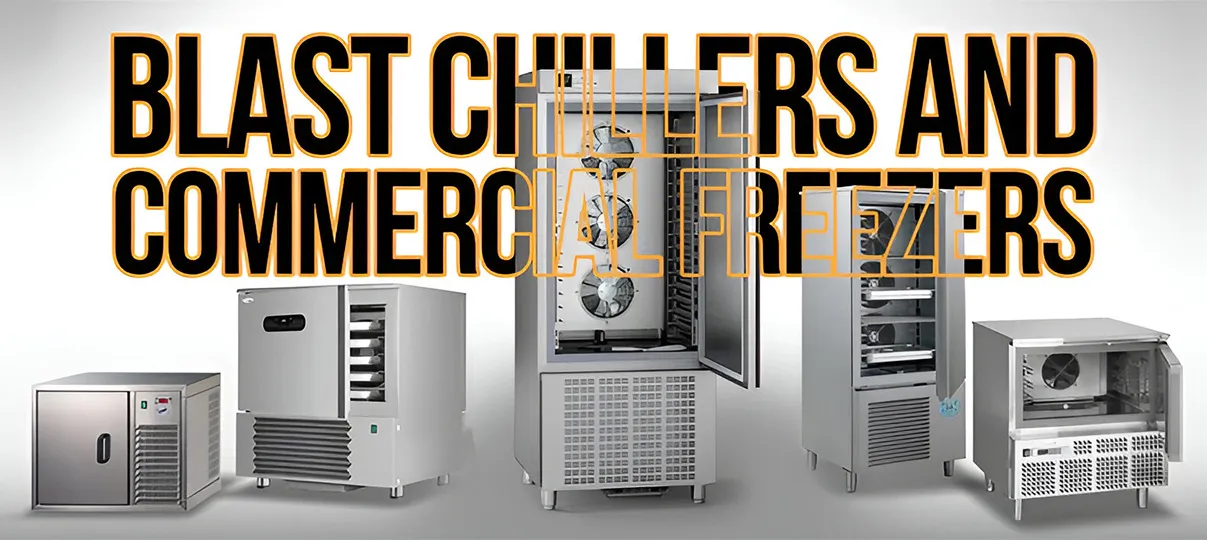
When it comes to equipping a commercial kitchen, choosing the right appliances is crucial. Two important pieces of equipment in the realm of food preservation are blast chillers and commercial freezers. While both serve the purpose of cooling and preserving food, they do so in different ways and are suited for different needs. In this article, we’ll explore the differences between blast chillers and commercial freezers, helping you decide which is the best fit for your kitchen.
What Are Blast Chillers?
Blast chillers are specialized appliances designed to rapidly cool down food to a safe storage temperature. This quick cooling process helps to preserve the quality, taste, and nutritional value of food while also preventing bacterial growth.
How Do Blast Chillers Work?
Blast chillers work by circulating very cold air over food items. This rapid cooling process is much faster than traditional methods, and it’s particularly useful for quickly reducing the temperature of cooked foods. The key advantage is that it helps to lock in flavors and maintain food texture.
Benefits of Using Blast Chillers
The primary benefit of a blast chiller is its speed. By cooling food quickly, it minimizes the time food spends in the "danger zone" - the temperature range where bacteria can multiply rapidly. Additionally, blast chillers help maintain the moisture and quality of food, which is crucial for both taste and appearance.
Ideal Use Cases for Blast Chillers
Blast chillers are particularly valuable in environments where food needs to be prepared in advance and then chilled for later use. This includes catering businesses, large-scale restaurants, and any establishment that needs to store food safely for future serving.
What Are Commercial Freezers?
Commercial freezers are standard appliances in any kitchen, designed to store food at freezing temperatures for extended periods. They are essential for long-term food preservation and are available in various sizes and configurations to suit different kitchen needs.
How Do Commercial Freezers Work?
Commercial freezers maintain a consistent freezing temperature, usually at or below 0°F (-18°C), to ensure that food remains frozen and safe for consumption over time. Unlike blast chillers, commercial freezers are not designed for rapid cooling but rather for sustaining a stable, cold environment.
Benefits of Using Commercial Freezers
The main advantage of commercial freezers is their ability to store large quantities of food for long periods. This is particularly beneficial for ingredients that are bought in bulk or for seasonal items that need to be preserved until needed.
Ideal Use Cases for Commercial Freezers
Commercial freezers are ideal for any kitchen that requires ample storage for frozen goods. They are perfect for restaurants, grocery stores, and food production facilities that need to keep ingredients and prepared meals frozen for later use.
Comparing Blast Chillers and Commercial Freezers
While both appliances are used for preserving food, their functions and benefits differ significantly. Here’s a closer look at how they compare:
Speed of Cooling
Blast chillers are designed for rapid cooling, making them ideal for quickly reducing the temperature of hot foods. Commercial freezers, on the other hand, are meant for maintaining low temperatures over time rather than quickly cooling down food.
Impact on Food Quality
Because blast chillers cool food rapidly, they help maintain the quality, texture, and flavor of food. This is particularly important for dishes that need to be reheated or served cold. Commercial freezers are more about preservation over time, which can sometimes affect the texture of certain foods when thawed.
Storage Duration
If your primary concern is long-term storage, commercial freezers are the better choice. They are specifically designed to keep food frozen for extended periods. Blast chillers, while excellent for rapid cooling, are not intended for long-term storage.
Energy Efficiency
Energy consumption can vary between these two appliances. Blast chillers generally use more energy during the rapid cooling phase, while commercial freezers consume energy consistently to maintain freezing temperatures.
Which Is Right for Your Kitchen?
Choosing between a blast chiller and a commercial freezer depends on your kitchen’s specific needs. Consider the following factors:
- Type of Food Preparation: If your establishment frequently prepares large quantities of food that need to be quickly chilled, a blast chiller could be a better investment. For kitchens focused on long-term storage, commercial freezers are essential.
- Volume of Food: High-volume kitchens that handle a lot of food items daily may benefit from the quick cooling capabilities of blast chillers to ensure food safety and quality.
- Space and Budget: Commercial freezers come in various sizes and tend to be more budget-friendly, while blast chillers are typically more specialized and can require a larger upfront investment.
Conclusion
Both blast chillers and commercial freezers are valuable kitchen appliances, each with its own set of advantages. Understanding the specific needs of your kitchen will help you make an informed decision. Whether you prioritize rapid cooling for food safety and quality or long-term storage for bulk ingredients, selecting the right equipment can enhance your kitchen's efficiency and food preservation capabilities.
By carefully evaluating your kitchen's demands, space, and budget, you can choose the appliance that best supports your culinary operations and keeps your food fresh and safe.