
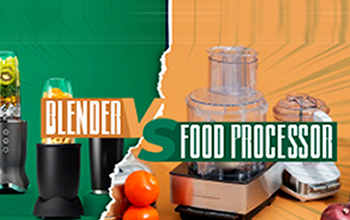
When it comes to kitchen appliances, blenders and food processors are two of the most versatile tools you can own. However, choosing between them can be a bit confusing. In this guide, we'll break down the differences, uses, and benefits of each, helping you decide which is best suited for your needs.
Understanding the Basics
What is a Blender?
A blender is an appliance that mixes, purees, or emulsifies food and other substances. Its design typically includes a tall jar with a lid and a set of rotating blades at the bottom. Blenders are perfect for liquids and soft foods, making them ideal for smoothies, soups, and sauces.
What is a Food Processor?
A food processor, on the other hand, is designed to perform more labor-intensive tasks. With a wider, shorter bowl and interchangeable blades and discs, it excels at chopping, slicing, and shredding a variety of ingredients. It's your go-to tool for tasks like chopping vegetables, kneading dough, or grating cheese.
Key Differences Between Blenders and Food Processors
Design and Functionality
The main difference lies in their design and functionality. Blenders are generally more suited for liquids, while food processors handle solid foods more effectively. This difference is due to their blade design and the way they circulate food inside the container.
Blade and Attachments
Blenders typically have fixed blades, while food processors come with multiple attachments for different tasks. These attachments include slicing discs, shredding discs, and dough blades, offering more versatility in food preparation.
Speed and Control
Blenders usually have multiple speed settings and some even feature pre-set programs for specific tasks like crushing ice or making smoothies. Food processors, however, offer more precise control with a pulse function, allowing you to chop or puree ingredients to your desired consistency.
When to Use a Blender
Ideal for Liquids
If you're making soups, smoothies, or milkshakes, a blender is your best bet. Its ability to handle liquids makes it perfect for these tasks, and it can also crush ice effectively for cold drinks.
Emulsifying and Pureeing
Blenders are excellent for emulsifying dressings and pureeing ingredients into smooth textures. If you're a fan of homemade nut butters or creamy hummus, a high-powered blender can achieve the silky consistency you desire.
When to Use a Food Processor
Chopping and Slicing
When it comes to chopping vegetables or slicing fruits, a food processor is unmatched. It can quickly and evenly chop large quantities of food, saving you time and effort in the kitchen.
Dough Making
For bakers, a food processor is a valuable tool for making dough. Whether you're preparing pizza, pie, or bread dough, the dough blade attachment simplifies the kneading process.
Grating and Shredding
Grating cheese or shredding vegetables is a breeze with a food processor. Its powerful motor and sharp discs can handle hard ingredients without breaking a sweat.
Pros and Cons
Blender Pros
Versatile for Liquids: Perfect for smoothies, soups, and sauces.
Ease of Cleaning: Generally easier to clean due to simpler design.
Compact Design: Takes up less counter space.
Blender Cons
Limited to Liquids: Not as effective with solid foods.
Less Versatile: Fewer attachments and capabilities compared to food processors.
Food Processor Pros
Versatile for Solids: Excels at chopping, slicing, and shredding.
Multiple Attachments: Offers a wide range of food preparation options.
Powerful Motor: Handles tough tasks with ease.
Food Processor Cons
Bulky Design: Takes up more counter space.
Complex Cleaning: More parts to clean and assemble.
Choosing the Right Appliance
When deciding between a blender and a food processor, consider what types of tasks you'll be performing most often. If you're frequently making smoothies or soups, a blender is the way to go. If you need a tool for chopping, slicing, and preparing dough, a food processor will be more beneficial.
Budget and Space Considerations
Think about your budget and available kitchen space. Blenders are generally more affordable and take up less space. However, if you have the budget and space for both, they can complement each other well in a busy kitchen.
Versatility and Needs
Consider your cooking habits. If you enjoy experimenting with a variety of recipes, having both appliances might be worthwhile. Their combined capabilities will cover nearly any task you might encounter in the kitchen.
Conclusion
In the end, both blenders and food processors have their unique advantages. Understanding their differences and strengths will help you make an informed decision. Whether you choose one or both, these appliances can significantly enhance your culinary experiences, making food preparation faster and more enjoyable.
By considering your personal cooking style and needs, you'll be better equipped to choose the best blender or food processor for your kitchen. Happy cooking!