
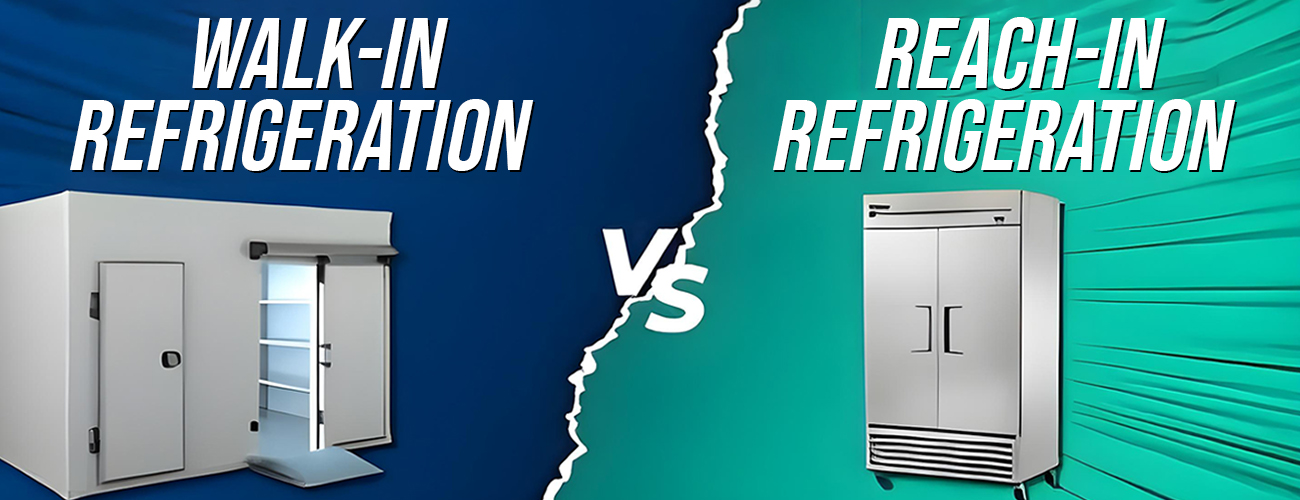
Choosing the right refrigeration system is crucial for any business in the food service industry. Whether you're running a restaurant, a café, or a catering service, the type of refrigerator you choose can significantly affect your operation's efficiency and food quality. In this article, we'll compare walk-in and reach-in refrigerators, exploring their pros, cons, and best uses to help you make an informed decision.
Understanding the Basics
Before diving into the specifics, it's essential to understand what differentiates walk-in and reach-in refrigerators.
Walk-In Refrigerators
Walk-in refrigerators are large, enclosed spaces designed to store significant amounts of perishable goods. They resemble small rooms, allowing individuals to walk inside to access stored items.
Reach-In Refrigerators
Reach-in refrigerators are more like the residential refrigerators you find in homes but on a larger scale. They're designed for quick access and are typically found in commercial kitchens.
Pros and Cons of Walk-In Refrigerators
Walk-in refrigerators offer a unique set of advantages and drawbacks. Let's explore them.
Pros of Walk-In Refrigerators
- Large Storage Capacity: Walk-in refrigerators can store vast amounts of food, making them ideal for large operations.
- Efficient Organization: With ample space, these refrigerators allow for organized shelving and easy access to ingredients.
- Customizable: They can be tailored to fit specific spatial requirements and temperature needs.
Cons of Walk-In Refrigerators
High Initial Cost: Installing a walk-in refrigerator can be expensive due to construction and customization needs.
Energy Consumption: Larger units require more energy to maintain consistent temperatures.
Space Requirement: They take up a significant amount of space, which might not be suitable for smaller establishments.
Pros and Cons of Reach-In Refrigerators
Reach-in refrigerators offer their own benefits and limitations.
Pros of Reach-In Refrigerators
Cost-Effective: Reach-in refrigerators are generally cheaper to purchase and install.
Energy Efficiency: These units are typically more energy-efficient compared to walk-ins, especially for smaller operations.
Compact Design: Their smaller footprint makes them suitable for kitchens with limited space.
Cons of Reach-In Refrigerators
Limited Storage Capacity: They can't hold as much inventory as walk-in refrigerators.
Frequent Restocking: Smaller storage means more frequent trips to replenish supplies.
Less Customization: There are fewer options for adjusting shelving and temperature zones.
Best Uses for Walk-In Refrigerators
Walk-in refrigerators are best suited for certain types of businesses and scenarios.
Large Restaurants and Catering Services
For establishments that require bulk storage of ingredients and prepared foods, walk-in refrigerators offer the necessary capacity and organization.
Seasonal Businesses
Businesses that experience fluctuating demand, such as catering services, benefit from the flexibility and storage capacity of walk-in units.
Centralized Storage
For operations that need a centralized location for all their perishable goods, a walk-in refrigerator can serve as a primary storage solution.
Best Uses for Reach-In Refrigerators
Reach-in refrigerators excel in different environments.
Small Restaurants and Cafés
For smaller operations with limited space, reach-in refrigerators offer a practical solution for daily storage needs.
Fast-Paced Kitchens
In environments where speed and efficiency are crucial, reach-ins provide quick access to frequently used ingredients.
Supplementary Storage
They can serve as supplementary storage for larger operations, offering quick access to commonly used items while bulk storage remains in walk-in units.
Making the Right Choice
- When deciding between walk-in and reach-in refrigerators, consider the following factors:
- Space Availability: Ensure you have the necessary space for the type of refrigerator you choose.
- Budget: Assess your budget for both initial investment and ongoing operational costs.
- Operational Needs: Consider the scale of your operation and how much storage capacity you require.
- Energy Efficiency: Evaluate the long-term energy costs associated with each type of refrigerator.
Conclusion
Both walk-in and reach-in refrigerators play vital roles in commercial kitchens. The choice ultimately depends on your specific needs, budget, and available space. By understanding the pros, cons, and best uses of each type, you can select the refrigeration solution that best supports your business operations.
Remember, the right refrigerator can enhance efficiency, reduce waste, and help maintain the quality of your ingredients, making it a critical investment for any food service business.